
Kona Surfing
Big Island Surf Spots
Kona, Big Island
Kona Big Island Waves
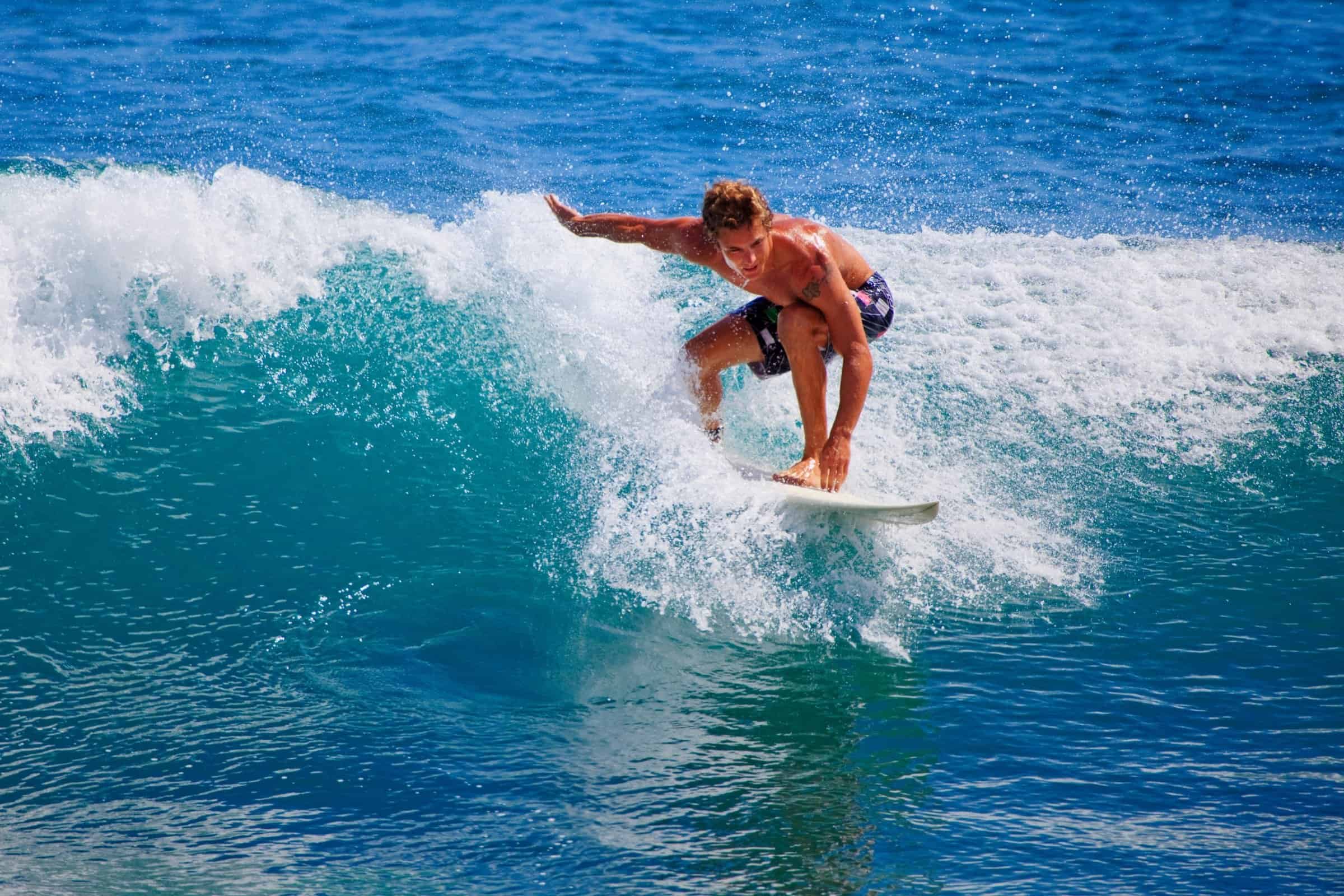
Most of the best surfing in Kona happens along a five-mile stretch of Aliʻi Drive. Heʻe nalu was once reserved for aliʻi, and it is still one of the clearest through-lines from old Hawaiʻi to how people live here now. Not everyone in Kona surfs. Almost everyone in Kona watches.

How to Read The Kona Coast
Kona surf is reef surf. There is very little sand under most of these breaks; takeoffs are steeper than what people are used to, and the difference between a good day and a bad one isn’t always visible from the parking lot. What gets called intermediate on the mainland is not always intermediate here.
The upside is that there is something working almost every day of the year, and the spots sort themselves cleanly by ability. Kahaluʻu for learning, Pine Trees for range, Banyans, Lyman’s, and Honl’s when you know what you are doing. Sunrise at Pine Trees and sunset at Lyman’s are two of the better free things available on this island.
Best Kona Surf Spots

Kahalu‘u
Kahaluʻu is where many locals and visitors learned to surf, and it is still the best place in Kona to start. A protected reef bay in Keauhou with a gentle, forgiving wave and a lifeguard tower, which is a rare combination here. Surf schools work at the beach park, from Kahaluʻu Surf and Sea across the road to parked vans along the Ali‘i. The reef is shallow and sharp, so booties are not a bad idea.

Pine Trees
Kohanaiki Beach Park, which nobody local calls this (Just call it Pine Trees, or Pines). One of Kona’s most consistent breaks, with several peaks along the shoreline and something rideable for most skill levels. Commercial lessons aren’t permitted here, so come with some experience. It is also a good camping beach, and weekend family surf trips out here go back generations.

Banyans
The heart of the Kona surf scene and the break where the island’s talent comes up. On any decent day, you will see kids who will be very good someday trading waves with people who already are. On big days, the barrels over the reef are worth watching from the seawall even if you have no intention of paddling out. Deep local lineup, so read the water and wait your turn.
Honl’s
A reef break just south of Historic Kailua Village that works year-round, with rights and lefts off the same peak. Easy to reach, easy to park, and with picnic tables, grass, and shade right there, it’s the one I point families toward when somebody in the group surfs, and the rest don’t. It is not a beginner wave, though. Experienced surfers only. Popular with bodyboarders as well.

Lyman’s
A long left point break and one of the prettier waves on this coast. It picks up the winter swells and can run a long line across the bay, though it holds up reasonably well the rest of the year too. When it gets big, this is where the good Kona surfers turn up. Sunset from the wall here is one reason people fall for Aliʻi Drive in the first place. And if you just want to spectate, this is a convenient option.
Magic Sands
Laʻaloa Beach Park, known to everyone as Magic Sands for the way the sand disappears during a big winter swell and returns later in the year. The shorebreak is more of a bodyboarding and bodysurfing wave than a board wave, and it is genuinely powerful, with a long history of neck and shoulder injuries. Lifeguarded, which matters here. Watch it a while before you decide.
Penn Henderson, R(S)
Twenty-Five Years on The Kona Coast
I have lived just a few minutes from these surf spots since 2001, and I am in the ocean most weeks of the year. I know which breaks are working before I get there, the best places to park, and which stretch of Aliʻi Drive gets quiet in the afternoon and which one never does. That is not surf knowledge exactly. It is knowing a coastline.
It turns out to be the useful kind. When somebody calls me about a place on Aliʻi Drive, the questions underneath are almost always about the water. How close is the ocean? Can I surf, dive, or snorkel? Is the shoreline accessible or eroding? What does a big winter swell actually do to this building? I can answer those firsthand, having lived here for decades.

Kona Surfing
Surf Safe, Surf With Aloha

Surf Safe
Never surf alone, and when in doubt, do not go out. Check conditions before you paddle, because the water here changes fast, and what looks calm from the parking lot often isn’t. Know the hazards: strong currents, sharp reef, rocks, and, on rare occasions, sharks. Check forecasts, take a lesson, talk to locals first.

Surf Etiquette
Do not drop in on somebody else’s wave. Before you paddle for one, look behind and to the side to see whether it is already taken, and look ahead before you take off. If you are new, stay inside and closer to shore, especially when it is big. Respect for the ocean and for the people who grew up surfing here goes a long way.

Surf Lessons
If you are starting out, a certified local school is the safest and by far the most enjoyable way in. They bring the foam-top longboards, the rash guards, and the local knowledge you cannot get from a forecast. Kahaluʻu Surf and Sea, Hawaii Lifeguard Surf Instructors, and Kona Town Surf Adventures all work this coast.
What Ocean Enthusiasts Ask Before Buying
The question I get most on this coast is some version of how close the water is, and it is never really about distance. It is about whether you can carry a board across the street, whether the noise from Aliʻi Drive reaches the lanai, whether the sunset lines up with your living room from November through February.
Then there is the part nobody thinks to ask about until later. Shoreline setback rules, what a big winter swell does to a seawall, how a building has handled surge historically, what salt air does to everything metal in a unit. Those answers exist. I can pull the actual history on a specific property and tell you what you are buying into before you write an offer.

Love the Ocean? Here’s Where to Buy in Kona:
FAQ
Common Questions About Surfing In Kona
Talk Story
Every Big Island move starts with a conversation. Tell me what you are looking for, and we will take it from there.


75-1029 Henry St., Suite 301
Kailua-Kona, HI 96740
Phone: (808) 345-6214
Email: penn@pennhenderson.com
